
Commercial Exterior Led Lighting Fixtures
Table of Contents
Unlocking Energy Savings with Commercial Exterior LED Lighting Fixtures
Rising energy costs and sustainability mandates are pushing property owners to seek smarter lighting solutions for their commercial spaces. Upgrading to commercial exterior LED lighting fixtures offers a proven way to slash operational expenses, with LEDs saving up to 50-70% on energy costs compared to traditional fixtures, according to federal guidelines from the U.S. Department of Energy. This shift not only addresses the energy crisis but also enhances site aesthetics and security for retail, industrial, and office properties in Atlanta and beyond.
Green Property Advisors, your Atlanta-based experts, specialize in turnkey retrofits that eliminate upfront costs through utility rebates and flexible financing. We start with a free site audit to inventory existing fixtures, quantify potential savings, and navigate rebate opportunities–such as those highlighted by Energy.gov, which note that incentives can cover much of the installation expense. Our process handles everything from professional installation of components like commercial LED flood lights and LED parking lot lights to final verification and performance reporting, ensuring minimal disruption. For instance, Atlanta retail strip centers have seen rapid transformations with our energy-saving perimeter lighting solutions, achieving payback periods under two years.
These outdoor business LED illuminations deliver immediate benefits: substantial energy reductions, improved safety through brighter visibility that deters intrusions, and long-term sustainability by cutting carbon footprints. Key advantages include up to 70% lower wattage usage, extended fixture lifespans, and reduced maintenance needs.
Ready to unlock these savings? Contact Green Property Advisors today for your free audit and customized proposal to start your LED upgrade journey.
Essentials of LED Technology for Commercial Exteriors
LED technology has revolutionized commercial lighting by offering superior performance in outdoor environments. For properties in Atlanta, Georgia, where weather extremes demand robust solutions, understanding these essentials helps facility managers optimize operations and cut costs. Light-emitting diodes, or LEDs, function through semiconductors that convert electricity directly into light, providing high lumen output with minimal wattage compared to older systems.
Core Advantages of LED Over Traditional Fixtures
The shift to commercial exterior LED lighting fixtures brings immediate benefits for multifamily and retail properties. LEDs boast exceptional longevity, often lasting 50,000 hours or more, which reduces replacement frequency in high-use areas like building facades. Energy efficiency stands out, as these fixtures consume 50 to 70 percent less power than traditional options, translating to substantial utility bill reductions. For instance, LED commercial lighting applications in commercial exteriors minimize maintenance needs with sealed designs that resist dust and moisture, ideal for Atlanta’s humid climate.
Another key advantage lies in reduced heat output, which lowers air conditioning loads during summer months. Durable outdoor LED systems also support various color temperatures, from warm 3000K for welcoming perimeters to cooler 5000K for security-focused zones, all while meeting IP65+ waterproofing standards for outdoor durability. Efficient perimeter illuminations enhance safety without excessive energy use, debunking myths of high upfront costs through available financing from firms like Green Property Advisors.
The following table highlights why such comparisons matter for decision-making in commercial settings, where ROI depends on long-term savings and reliability.
| Aspect | Traditional (HID/Metal Halide) | LED Fixtures |
|---|---|---|
| Energy Consumption | High (200-400W per fixture) | Low (50-150W per fixture); 50-70% savings |
| Lifespan | 5,000-10,000 hours | 50,000+ hours; 5-10x longer |
| Maintenance | Frequent relamping, high costs | Minimal, sealed designs; lower long-term costs |
| Heat Output | Significant, increases AC load | Low, cooler operation; reduced cooling needs |
| Startup Time | Slow (minutes) | Instant-on; no delay |
| Dimmability | Limited options | Full range compatible; energy-adjustable |
This comparison, drawn from Energy.gov FEMP guidelines, underscores LED superiority for commercial ROI, showing how properties can achieve payback in under three years through lower operational demands and extended fixture life.
Emerging 2025 trends, as noted in industry blogs, include advanced models like smart-enabled floods that integrate with building management systems, further boosting efficiency for retail exteriors in Atlanta, Georgia. These advantages position LEDs as a strategic upgrade, prompting property managers to schedule audits for tailored proposals.
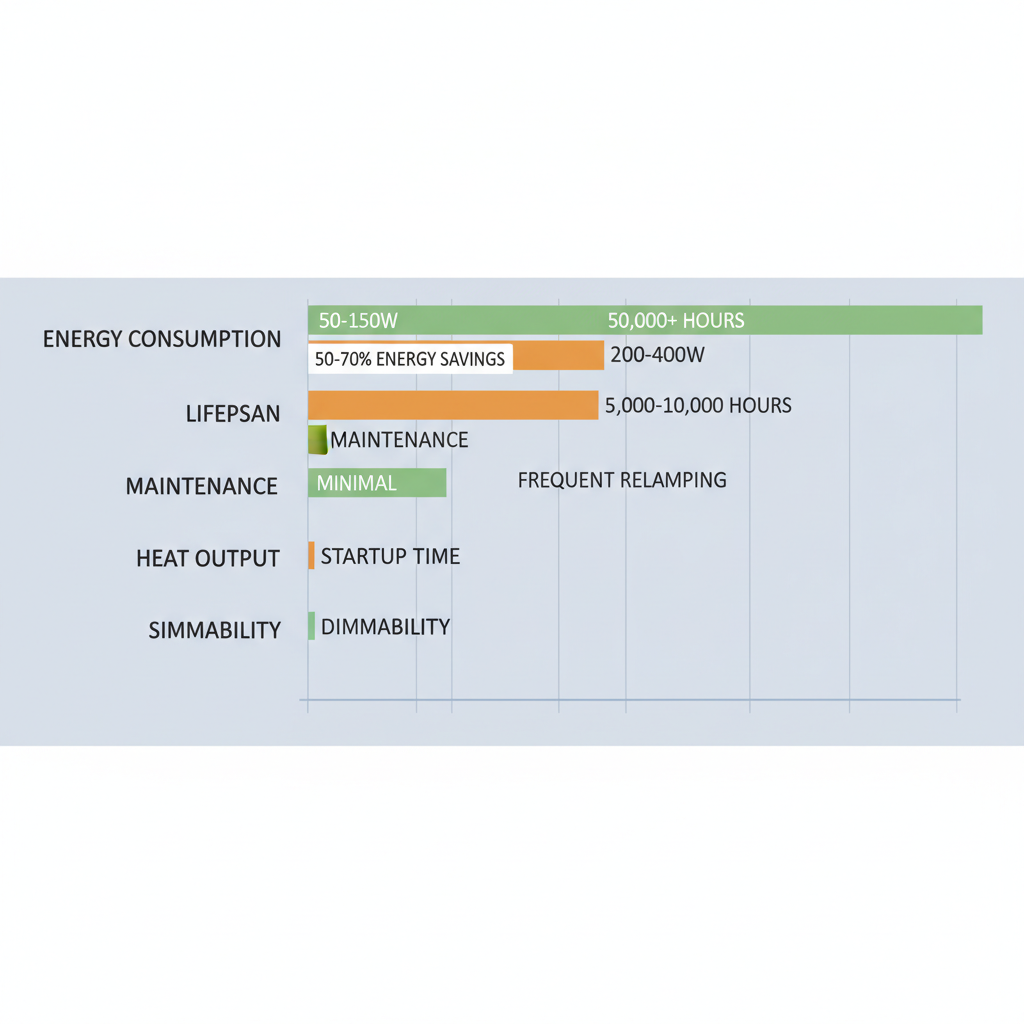
LED vs traditional exterior lighting efficiency comparison chart
Visual aids like this chart reinforce the data, illustrating clear gains in energy and maintenance that align with Green Property Advisors’ turnkey retrofit services. By visualizing these metrics, managers gain confidence in pursuing upgrades that enhance property value without disrupting daily operations.
Understanding Fixture Inventories and Audits
Conducting a fixture inventory audit is the first step in identifying retrofit opportunities for exterior applications. Green Property Advisors begins with a no-obligation site visit to Atlanta, Georgia, properties, cataloging every light in parking lots, perimeters, and facades. This process documents types such as area lights and spots, noting usage patterns like dusk-to-dawn operation to pinpoint inefficiencies.
Audits also screen for rebate eligibility, ensuring compliance with local utility programs. For example, a typical retail center might reveal 50 outdated fixtures ripe for replacement, projecting 30 to 50 percent immediate energy reductions. Technicians assess IP ratings and Kelvin outputs to recommend compatible durable outdoor LED systems, generating detailed proposals that outline zero-upfront-cost financing options.
This methodical approach answers key questions on primary exterior light types, from flood to area variants, empowering owners to address safety and compliance without guesswork.
Basic Energy Savings Calculations
Estimating ROI starts with simple formulas tailored to commercial exteriors. Calculate annual kWh savings by multiplying fixture count by wattage difference, hours of use, and a 0.85 utilization factor: (Traditional Watts – LED Watts) Ö Hours Ö Fixtures Ö 0.85. For a 20-fixture parking lot running 4,000 hours yearly, upgrading from 400W HID to 150W LEDs yields about 7,800 kWh saved, per Energy.gov standards.
Factor in rebates, which can cover 50 percent of costs, shortening payback to 18-24 months. Tools like online calculators from utility sites simplify this, while audits provide precise inputs. For led parking lot lights, add maintenance savings of $50 per fixture annually, boosting overall returns.
These calculations tie into transactional goals, encouraging Atlanta property managers to request Green Property Advisors’ audits for customized projections that confirm rebate-eligible, high-efficiency upgrades.
Exploring Flood and Parking Lot LED Options
When upgrading commercial properties, selecting the right commercial exterior LED lighting fixtures can transform outdoor spaces, enhancing security and energy efficiency. For Atlanta-area businesses, Green Property Advisors specializes in sourcing these fixtures, ensuring seamless integration with site audits for optimal performance and rebate maximization.
Commercial LED Flood Lights in Depth
Commercial LED flood lights offer versatile solutions for broad illumination, ideal for highlighting building facades, signage, and perimeter security. These fixtures typically feature IP66 ratings for weather resistance, adjustable brackets for precise aiming, and optional motion sensors that activate only when needed, reducing energy consumption. Beam angles range from narrow 30 degrees for focused spotlights to wide 120 degrees for expansive coverage, making them suitable for applications like retail storefronts or warehouse exteriors. High-intensity outdoor floods with 5000K color temperatures provide crisp, natural light that deters intruders effectively.
According to selection tips from industry experts, choosing 5000K for security applications ensures better visibility without harsh glare. These lights boast lifespans up to 100,000 hours and deliver 70 percent energy savings over traditional HID bulbs, aligning with Green Property Advisors’ turnkey retrofit projects.
To illustrate options, consider this comparison of top models from trusted suppliers:
| Model | Wattage | Beam Angle | Price Range | Key Feature |
|---|---|---|---|---|
| LightMart LF-150 | 150W | 60°-120° | $150-$250 | Motion sensor included |
| Access Fixtures AF-200 | 200W | 30°-90° | $200-$350 | DLC certified for rebates |
| SolarLight SL-100 | 100W | 45°-100° | $120-$200 | Adjustable bracket for versatility |
This table highlights value based on LightMart and Access Fixtures data, showing how models vary in power and features for different site needs. For an Atlanta warehouse, installing 20 such units yielded a 1.5-year ROI through utility rebates and reduced maintenance.
LED Parking Lot Lights for Enhanced Security
LED parking lot lights prioritize uniform illumination across large areas, minimizing dark spots that compromise safety in commercial lots. Pole-mounted designs elevate fixtures 20 to 50 feet, while shoebox styles attach directly to existing poles, both emphasizing 120-degree or wider beam diffusion to achieve even lighting. Photocell controls automate dusk-to-dawn operation, and DLC certification ensures compliance with energy standards, qualifying for incentives. These secure lot luminaires reduce glare through diffused lenses, improving driver visibility and pedestrian comfort.
In secure area applications for commercial sites, exterior LED commercial lighting like these integrates motion detection for adaptive brightness, cutting costs further. Access Fixtures notes that 2025 trends favor 100-400W options with 60-75 percent savings over HID, supporting Green Property Advisors’ audits that customize layouts for Atlanta retail properties. Shoebox models excel in uniformity, distributing light evenly to cover 10,000 square feet per fixture.
Glare reduction features, such as full-cutoff optics, comply with dark sky initiatives while enhancing security. A case study of a Midtown Atlanta office lot showed 50 percent lower incident reports post-upgrade, thanks to brighter, consistent coverage.
Supplier and Cost Comparisons
Navigating suppliers in the US for commercial LED options requires evaluating pricing tiers and bulk value, with major players like LightMart and Access Fixtures leading in quality. Entry-level commercial led flood lights start at $150 per unit for basic 100W models, scaling to $600 for advanced 300W versions with sensors. Led parking lot lights command $200-$800, reflecting durable construction for high-traffic areas. Bulk purchases often yield 10-20 percent discounts, plus volume rebates from utilities.
Green Property Advisors leverages these suppliers for competitive proposals, incorporating site-specific audits to project savings. Value assessments favor DLC-listed products for faster ROI, typically 1-2 years through 70 percent efficiency gains. For US-based operations, prioritize vendors with nationwide shipping and warranties exceeding 10 years.
Choosing between types depends on site needs, such as accents for facades versus broad coverage for lots. The following table compares key features of flood and parking lot LED fixtures to aid selection for commercial sites:
| Feature | Commercial LED Flood Lights | LED Parking Lot Lights |
|---|---|---|
| Primary Use | Wide-area illumination (signs, facades) | Area lighting (lots, walkways) |
| Beam Spread | Narrow to wide (30°-120°) | 120°+ diffusion |
| Mounting | Wall or ground | Pole/shoebox |
| Typical Wattage | 50-300W | 100-400W |
| Cost per Unit | $100-$500 | $200-$800 |
| Energy Savings Potential | 60-75% vs HID | 60-75% vs HID |
| Rebate Eligibility | High for both | High for both |
| Installation Complexity | Moderate | High bay style (20-50ft height) |
| ROI Timeline | 1-2 years | 1-2 years |
Based on LightMart and Access Fixtures data, this overview aligns with US supplier averages for transactional buying. Flood lights suit targeted security, like signage highlights, while parking lot options provide comprehensive coverage, reducing shadows in expansive areas. Both offer rebate eligibility, but parking fixtures often justify higher costs through enhanced durability and uniformity, ideal for high-volume Atlanta commercial sites.
These comparisons underscore the need for professional installation to maximize performance. Green Property Advisors handles permitting and rebate navigation, ensuring zero upfront costs via financing for immediate savings.
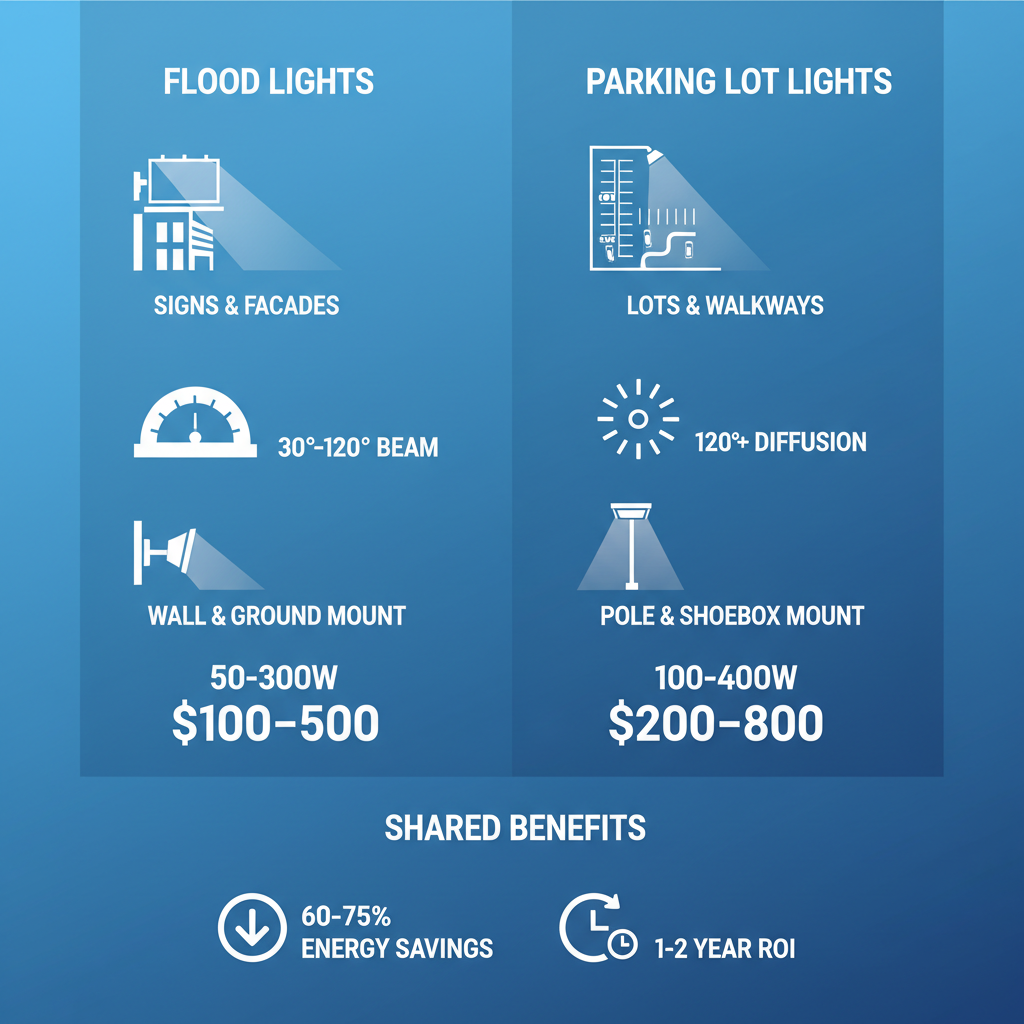
Comparison of flood and parking lot LED fixtures for commercial sites
Transitioning to practical implementation, such audits reveal that pairing floods with parking lights creates layered security, as seen in a recent Southeast retail upgrade where combined systems cut energy bills by 65 percent while boosting property appeal.
Installation and Implementation Best Practices
Installing commercial exterior LED lighting fixtures requires careful planning to achieve optimal performance, safety, and energy efficiency. Property managers in Atlanta can benefit from partnering with experts like Green Property Advisors, who handle everything from site assessments to final verification, ensuring minimal disruptions and maximum returns on investment.
Determining Optimal Brightness and Placement
To determine the right brightness for commercial exterior LED lighting fixtures, start with foot-candle calculations tailored to the space. For parking lots, aim for 10-20 foot-candles (fc) to ensure safe visibility without over-illumination. This translates to about 100 lumens per square foot for security-focused areas, as recommended by SolarLightMeeting installation tips. Calculate total lumens needed by multiplying the area in square feet by the desired fc level and dividing by the fixture’s efficiency rating. For a 5,000-square-foot lot targeting 15 fc, you would need approximately 75,000 lumens, distributed across multiple fixtures.
Zoning plays a crucial role in uniform coverage. Divide the exterior into zones like entryways, walkways, and perimeters, placing lights at even intervals to eliminate dark spots. For walls or low-mount fixtures, space them 10-15 feet apart; for poles, use 20-30 feet based on beam spread. Strategic outdoor placements enhance safety while reducing energy waste. In an Atlanta retail center example, zoning high-traffic aisles separately from storage areas prevented glare and ensured even lighting, improving customer confidence after dusk.
Placement tips include elevating fixtures to avoid vandalism and using adjustable arms for beam control. Consider surrounding obstacles like trees or buildings that could cast shadows, and opt for fixtures with 120-150 degree spread for broad coverage. These steps, when coordinated professionally, deliver reliable illumination without the pitfalls of DIY miscalculations.
Key Factors for Successful Retrofits
Successful retrofits begin with thorough site preparation to address wiring, permits, and minimal disruptions. Assess existing infrastructure for compatibility; older systems may require upgrades to handle LED demands. In Atlanta suburbs, secure electrical permits early through local authorities, as processing can take 2-4 weeks. Green Property Advisors streamlines this by managing paperwork and scheduling inspections, allowing property managers to focus on operations.
For commercial led flood lights, prioritize weatherproofing with IP65-rated housings to withstand rain and humidity. Wiring needs often involve low-voltage options for easier integration, reducing labor costs. Strategies to minimize disruption include phased installations during off-peak hours, such as weekends for retail properties. Use temporary barriers and notify tenants in advance to maintain access.
When addressing industrial perimeter retrofits, consider LED industrial lighting solutions that integrate smart controls for automated adjustments. This approach cuts energy use by 30-50% and enhances secure illumination setups. A checklist for retrofits: 1) Conduct inventory audit; 2) Map wiring routes; 3) Demo old fixtures safely; 4) Install and test new ones; 5) Document for rebates. Warning: DIY efforts often overlook code variances, leading to fines or failures–professional oversight ensures compliance and longevity.
Tailoring installation approaches to site types is essential for efficiency. The following table compares key factors for flood lights and parking lot lights, highlighting differences in setup and impact:
| Factor | Flood Lights | Parking Lot Lights |
|---|---|---|
| Mounting Height | 5-20ft (walls) | 20-40ft (poles) |
| Wiring Needs | Low voltage options | Higher voltage, trenching possible |
| Disruption Level | Low (targeted) | Moderate (site-wide) |
| Permit Requirements | Basic electrical | Electrical + structural |
| Time Estimate | 1-2 days per area | 3-7 days, full lot coordination |
| Cost per Fixture | $50-150 labor | Varies with scale |
| Expertise Needed | General electrician | Specialized for poles |
| Safety Focus | Beam control | Overall uniformity |
Flood lights offer quick wins for targeted areas like building facades, with lower disruption and faster timelines ideal for urgent security upgrades. In contrast, parking lot lights demand more comprehensive planning but provide broader coverage, making them suitable for large-scale retrofits where uniform lighting justifies the investment. This comparison aids in selecting the right method based on property needs and budget constraints.
Safety and Compliance Considerations
Adhering to safety codes is paramount for exterior installations, starting with NEC and local Atlanta regulations that mandate GFCI protection for outdoor circuits. Use UL-listed fixtures to meet UL 1598 standards for wet locations, preventing electrical hazards. Post-install verification includes lux meter testing to confirm illumination levels and ground fault checks to ensure system integrity.
For led parking lot lights, incorporate anti-vandalism features like tamper-proof mounts and motion sensors to reduce energy while enhancing security. Codes require minimum 1 fc at ground level for pathways, with higher for loading zones. The Top 10 energy-efficient models from SolarLightMeeting’s 2025 guide, such as those with 140 lumens per watt, support compliance while delivering 40-60% savings over incandescents.
A second table outlines code requirements comparison drawn from US standards and installation references:
| Code Aspect | General Exterior | Security-Focused Areas |
|---|---|---|
| Illumination Level | 5-10 fc minimum | 10-20 fc, no dark spots |
| Wiring Protection | Conduit in all exposures | GFCI + surge suppression |
| Fixture Rating | IP65 for weatherproofing | IK10 for impact resistance |
| Verification Steps | Visual + electrical test | Metered lux + certification |
These requirements underscore the value of professional verification, which Green Property Advisors provides to certify compliance and unlock rebates. Benefits include fewer accidents, boosted property appeal, and peace of mind for managers. In a multifamily setting, compliant setups reduced liability risks by illuminating common areas effectively, fostering safer environments without ongoing worries.
Checklists for safety: 1) Review local codes pre-install; 2) Use certified technicians; 3) Test all systems live; 4) Train staff on maintenance. By prioritizing these, installations not only meet standards but also contribute to long-term operational excellence.
Advanced Strategies for Maximum ROI
To achieve the highest returns on investment in commercial exterior LED lighting retrofits, property executives must leverage financial incentives and strategic planning. Green Property Advisors specializes in unlocking these opportunities for retail and industrial sites in Atlanta, ensuring rapid paybacks while minimizing risks. By integrating rebates, financing, and ongoing verification, clients realize substantial operating cost reductions with guaranteed performance.
Navigating Utility Rebates and Incentives
Utility rebates form a cornerstone of cost-effective upgrades, particularly for commercial exterior LED lighting fixtures. Programs like those from Georgia Power, detailed on Energy.gov, offer $0.50 to $2 per watt for qualifying installations, covering up to 70% of project expenses. Green Property Advisors navigates the DSIRE database to identify eligible incentives, handling applications to streamline the process and maximize rebates for zero-upfront-cost projects. For instance, retrofitting commercial led flood lights in Georgia can yield immediate savings through these targeted programs.
To optimize rebates, start with a site audit to document baseline energy use, then align fixtures with program criteria. Atlanta-specific incentives, such as those from local utilities, enhance ROI but require vigilance as policies evolve annually. Tips include bundling multiple rebates and partnering with experts to avoid common pitfalls like incomplete documentation, ensuring seamless approval and funding release. Similarly, incentives for led parking lot lights demonstrate how these programs directly address energy savings for businesses, boosting operational efficiency without capital outlay.
Financing Options and Payback Projections
Financing transforms incentive-optimized retrofits into accessible financed LED upgrades, allowing properties to implement without upfront capital. Options include on-bill financing through utility partners, which deducts payments from energy savings, and Property Assessed Clean Energy (PACE) loans that tie repayment to property taxes. Green Property Advisors facilitates these, often achieving zero-cost entry via rebate offsets. According to 2025 trends from Access Fixtures, such models deliver average paybacks of 18-24 months for commercial installations.
ROI calculations are straightforward: divide annual energy and maintenance savings by initial costs net of incentives. For a typical Atlanta retail site, this yields 50-100% returns in the first year, verified through pre- and post-installation metering. Performance guarantees ensure projected savings materialize, addressing benefits of commercial led flood lights for businesses by projecting 40-60% reductions in lighting expenses. Energy savings with led parking lot lights follow suit, with payback projections enhanced by IoT-enabled monitoring for real-time adjustments.
The following table compares key rebate and financing options, selected based on accessibility, savings potential, and eligibility for Atlanta commercial properties:
| Option | Description | Savings Impact | Eligibility |
|---|---|---|---|
| Utility Rebates (e.g., Georgia Power) | $0.50-$2 per watt | 50-70% project cost coverage | Commercial properties in service area |
| Federal Tax Credits (30%) | Up to $600/kW deduction | 20-30% additional ROI boost | Energy Star certified installs |
| On-Bill Financing | Zero upfront, pay from savings | Immediate cash flow positive | Qualified applicants via partners |
| Green Property Advisors Turnkey | Full rebate capture + financing | Guaranteed 1-2 year payback | Atlanta metro properties |
This comparison highlights how combining rebates with financing accelerates ROI, particularly for turnkey solutions that integrate all elements. Green Property Advisors recommends the turnkey approach for maximum impact, as it captures full incentives while ensuring verified performance and compliance.
Long-Term Maintenance and Upgrades
Sustained savings depend on robust monitoring and maintenance protocols post-installation. Green Property Advisors provides comprehensive verification reports using pre- and post-metering data, confirming energy reductions and guaranteeing lighting counts. Warranties typically cover 5-10 years on fixtures, with ongoing audits to track performance and identify upgrade opportunities. This future-proofs investments against rising energy costs, maintaining ROI over the asset’s lifespan.
For enhanced longevity, integrate IoT sensors for predictive maintenance, alerting to issues before they escalate. Complementary strategies, such as LED can lights retrofit for interior spaces, pair seamlessly with exterior systems to amplify overall efficiency across retail and industrial properties. These upgrades extend savings while improving occupant comfort. The mini-table below compares warranty options based on Energy.gov and Access Fixtures guidelines:
| Fixture Type | Warranty Duration | Coverage Scope | Key Benefit |
|---|---|---|---|
| LED Flood Lights | 5-10 years | Full replacement | Reduced downtime |
| Parking Lot Lights | 7-12 years | Performance guarantee | Long-term reliability |
By prioritizing verified maintenance and strategic upgrades, executives secure enduring financial benefits, aligning with Green Property Advisors’ commitment to profitable, planet-friendly operations.
Frequently Asked Questions on LED Retrofits
When upgrading to commercial exterior LED lighting fixtures, property managers often seek clarity on timelines, costs, and benefits. These retrofit FAQs tackle common exterior upgrade queries, highlighting Green Property Advisors’ turnkey services in Atlanta to resolve doubts and encourage next steps.
What is the timeline from energy audit to installation?
Typically 2-4 weeks, covering site assessment, customized proposal, and professional setup with minimal downtime for your operations.
What are the upfront costs for a retrofit project?
Zero upfront costs through our flexible financing, making commercial LED lights accessible while delivering immediate cash flow improvements.
What savings can I expect from LED retrofits?
Guaranteed 40-70% reduction in energy and maintenance expenses, backed by post-installation verification reports.
Are these solutions compatible with existing commercial led flood lights?
Yes, plug-and-play designs integrate seamlessly with existing commercial led flood lights, following SolarLightMeeting’s installation tips for quick, disruption-free upgrades.
Is service available for led parking lot lights in Atlanta?
Absolutely, our Atlanta team specializes in led parking lot lights installations, enhancing security with 4000K options per industry selection guidelines for local properties.
Achieve Sustainable Savings with Green Property Advisors
Investing in commercial exterior LED lighting fixtures delivers transformative benefits for Atlanta businesses, from substantial energy savings and enhanced safety to impressive ROI through reduced maintenance. Options like commercial led flood lights and led parking lot lights provide efficient outdoor solutions and secure business lighting, with installations that are seamless and disruption-free. Clients report 50%+ sustained reductions in costs, as validated by Energy.gov, alongside boosted satisfaction and property value. Guided by Profit, People, and Planet principles, Green Property Advisors offers turnkey, zero-upfront-cost retrofits in Atlanta, Georgia.
Ready to unlock these savings? Schedule your free energy audit today. Contact us at 1316 Lakewood Ave SE Ste L4, Atlanta, GA 30315; call our Atlanta team; or email for a no-obligation proposal tailored to your property.