
Led Lighting Retrofit Companies
Table of Contents
Understanding LED Lighting Retrofits for Commercial Properties
In Atlanta’s bustling commercial landscape, rising utility costs challenge property owners and managers of offices, retail spaces, and industrial facilities. Energy-efficient lighting upgrades offer a practical solution to cut expenses and boost sustainability without extensive overhauls. Leading LED lighting retrofit companies like Green Property Advisors specialize in transforming properties in Atlanta, Georgia, by delivering seamless upgrades that yield immediate returns.
LED lighting retrofits involve replacing outdated fixtures with modern, long-lasting LEDs while reusing existing infrastructure, such as wiring and ceilings. This approach minimizes disruption and accelerates payback periods, often within 12 to 24 months. In Atlanta’s commercial sector, demand surges due to escalating energy rates and incentives for green initiatives. According to industry guides, these retrofits can reduce energy use by 50-70% in typical office and retail settings, enhancing light quality and occupant comfort simultaneously. Green Property Advisors, with over 20 years of expertise, provides comprehensive services covering audits, installations, and rebate navigation for multifamily, office, retail, and industrial properties.
Explore commercial LED retrofits through this guide, starting with LED fundamentals and progressing to implementation strategies. Our turnkey LED retrofit services ensure zero upfront costs via financing options, guaranteeing performance and verified savings. Contact Green Property Advisors today for a free audit and proposal tailored to your Atlanta property needs, paving the way for sustainable, cost-effective operations.
LED Technology Fundamentals and Benefits
LED technology represents a transformative advancement in solid-state lighting, offering commercial properties in Atlanta, Georgia, a reliable path to enhanced efficiency and cost savings. By understanding its core principles, property owners can confidently pursue upgrades that align with operational needs and local incentives.
At its heart, LED lighting operates through semiconductors called diodes that convert electricity directly into light with remarkable precision. Unlike traditional bulbs that rely on filaments or gases, LEDs produce illumination via electroluminescence, generating minimal heat and maximizing energy transfer to visible light. This process eliminates the inefficiencies of older systems, where much of the power dissipates as warmth. For commercial spaces, this translates to stable performance even in high-use environments like offices or retail outlets. According to the Renovo Energy Guide, LEDs achieve up to 75% energy savings compared to incandescents, making them ideal for Atlanta’s variable climate demands.
The benefits of LED technology extend far beyond basic illumination, providing tangible advantages for property managers seeking sustainable commercial lighting solutions. Key gains include substantial reductions in operational costs and improved environmental impact. For instance:
- Energy Savings: LEDs use up to 75% less electricity, lowering utility bills in Atlanta where average commercial rates hover around 10 cents per kWh, as noted in Georgia Power reports.
- Extended Lifespan: Lasting 25,000 to 50,000 hours–25 times longer than traditional incandescents–reducing replacement frequency and downtime.
- Lower Maintenance: Fewer bulb changes mean less labor and disruption, especially valuable in multifamily or industrial settings.
- Enhanced Comfort: Superior light quality with even distribution and color rendering boosts occupant satisfaction and productivity.
Involving experienced led lighting retrofit companies ensures these advantages are fully realized through tailored implementations. The National LED overview highlights case studies where commercial sites achieved rapid improvements in light uniformity and energy metrics post-upgrade.
When evaluating lighting options for Atlanta properties, comparisons reveal why LEDs outperform traditional systems, particularly under local budget constraints influenced by rising utility costs. The following table outlines key metrics based on DOE reports and Atlanta-specific utility data:
| Aspect | LED Retrofits | Traditional Lighting |
|---|---|---|
| Energy Efficiency | Up to 75% less energy use | High energy consumption |
| Lifespan | 25,000-50,000 hours | 1,000-10,000 hours |
| Maintenance Costs | Low – fewer replacements | High – frequent bulb changes |
| ROI Payback | 1-3 years with rebates | Longer, 5+ years without incentives |
This comparison underscores LEDs’ superiority for commercial retrofits in Atlanta, Georgia, where Georgia Power rebates can accelerate payback to under two years. Traditional lighting’s high consumption and short lifespan strain budgets, while LEDs deliver quick returns and long-term reliability, as validated by Renovo Energy’s efficiency analyses. Property owners benefit from these insights when auditing sites with firms like Green Property Advisors, which navigate incentives for maximum savings.
Efficient LED upgrades find perfect applications in diverse Atlanta settings, such as offices and retail spaces where commercial led retrofits enhance visibility without overhauling infrastructure. Multifamily buildings gain from consistent lighting that reduces complaints, and industrial facilities appreciate the durability under heavy use. These targeted implementations support broader goals of cost reduction and tenant satisfaction.
Opting for led retrofit services over full redesigns proves more practical for most scenarios. Retrofits involve simple fixture swaps, minimizing disruption and costs while qualifying for rebates–often completing in weeks versus months for redesigns. This approach preserves existing layouts, delivering efficient LED upgrades with proven ROI for Atlanta commercial properties.
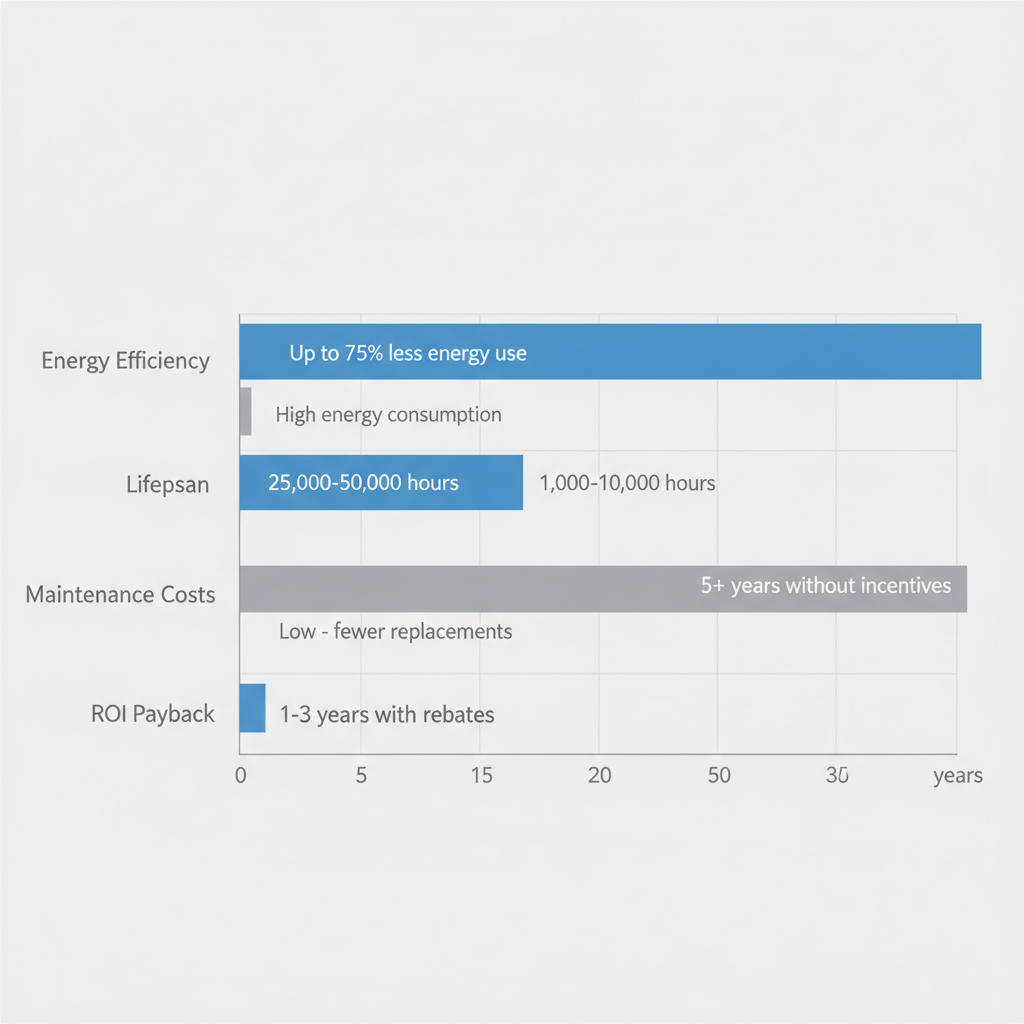
LED versus traditional lighting comparison for commercial energy savings
Visualizing these differences reinforces the strategic value of transitioning to LEDs, empowering decisions that align with both immediate financial needs and long-term sustainability in Atlanta’s dynamic property market.
Exploring Commercial LED Retrofit Applications
Commercial properties in Atlanta stand to gain significantly from targeted LED upgrades, particularly through partnerships with experienced led lighting retrofit companies that specialize in minimizing disruptions while maximizing returns. These property-specific LED upgrades can transform energy consumption patterns, offering substantial cuts in operational costs amid rising utility rates. For instance, offices and retail spaces benefit from enhanced lighting that boosts productivity and customer appeal, while multifamily and industrial sites leverage rebates to offset investments. By focusing on commercial led retrofits tailored to local needs, property managers can achieve rapid paybacks, often within 18 to 24 months, as demonstrated in Atlanta installations handled by firms like Green Property Advisors.
Ideal Applications for Offices and Retail
In Atlanta offices, recessed and can light retrofits represent a straightforward path to improved focus and occupant comfort. These upgrades replace outdated fluorescent fixtures with energy-efficient LEDs that provide uniform illumination without glare, reducing eye strain during long work hours. Energy savings typically reach 60-80%, allowing facilities to redirect funds toward core operations. For retail spaces, exterior LED fixtures enhance visibility and security, drawing in evening foot traffic while cutting maintenance needs in Georgia’s humid climate.
The second key advantage lies in the seamless integration of retrofit LED recessed lights, which can be installed during off-hours to avoid business interruptions. retrofit LED recessed lights offer dimmable options that adapt to varying occupancy, further optimizing energy use. Retailers in Atlanta have reported up to 70% reductions in lighting costs post-upgrade, with improved ambiance leading to higher sales. However, success hinges on initial fixture audits to identify compatible areas, a step often overlooked that can lead to mismatched installations.
- Pros for offices: Enhanced light quality for better productivity, quick ROI through Georgia Power rebates.
- Pros for retail: Brighter exteriors deter theft, customizable color temperatures for branding.
Common pitfalls include skipping professional assessments, which might result in over-illumination or rebate ineligibility. Atlanta’s weather demands weatherproof seals on exterior upgrades to prevent moisture damage.
The following table outlines retrofit applications by property type, drawing from Georgia Power incentives and DOE benchmarks to guide selection in Atlanta.
| Property Type | Energy Savings Potential | Installation Complexity | Rebate Availability |
|---|---|---|---|
| Offices | 60-80% reduction | Low – recessed/can lights | High – up to $0.50 per foot |
| Retail Spaces | 50-70% reduction | Medium – exterior fixtures | Moderate – signage incentives |
| Multifamily | 40-60% in common areas | Medium – phased installs | High – per-unit rebates |
| Industrial | 70-90% for high-bay lights | High – large-scale swaps | High – industrial programs |
This comparison highlights how offices and retail enjoy lower complexity and strong rebate support, making them prime starting points for led retrofit services. Property managers should audit fixtures to match these potentials, ensuring rebates cover 30-50% of costs in Atlanta.
Multifamily and Industrial Retrofit Opportunities
Multifamily properties in Atlanta present unique opportunities for LED retrofits in common areas and individual units, enabling cost-sharing among tenants and owners. Upgrades to hallway and lobby lighting can yield 40-60% savings, with minimal disruption through phased implementations that avoid peak occupancy times. These targeted lighting retrofits also improve safety and appeal, potentially increasing property values in competitive rental markets. Green Property Advisors often coordinates with utility programs to secure rebates, allowing zero-upfront-cost options for cash-strapped managers.
Industrial settings demand robust solutions like high-bay and floodlight swaps, suited for harsh environments with dust and vibrations. In Atlanta warehouses, these retrofits achieve 70-90% energy reductions, crucial for 24/7 operations. Vantix Electric case studies show facilities cutting annual bills by thousands through such upgrades, with LEDs lasting up to 50,000 hours to slash relamping frequency. Yet, humid conditions require IP-rated fixtures to withstand corrosion, a detail emphasized in local audits.
Choosing applications starts with inventory audits to assess fixture types and usage patterns, preventing overinvestment in low-traffic zones. For multifamily, pros include shared rebate pools that accelerate payback; in industrial, the focus is on durability for minimal downtime during swaps.
- Multifamily pros: Tenant satisfaction from brighter, cooler lights; easy rebate navigation for common areas.
- Industrial pros: High lumen output for vast spaces; resistance to extreme temperatures.
Pitfalls like ignoring Atlanta’s permitting requirements can delay projects, so engaging led retrofit services early ensures compliance. Overall, these opportunities align with transactional goals, prompting owners to seek proposals for customized ROI analyses.
In industrial contexts, distinguishing between exterior and interior fixtures is key for optimal results. The table below compares these options, informed by local rebate structures.
| Fixture Type | Benefits | Cost (per unit, incl. install) |
|---|---|---|
| Exterior LEDs | Enhanced security, weatherproof | $150-300, rebates up to 50% |
| Interior High-Bay | Superior brightness, energy efficiency | $200-500, industrial incentives |
Exterior upgrades excel in perimeter lighting for safety, while interior ones target production areas for maximum savings. Following audits, Atlanta facilities can prioritize based on these factors, often achieving full rebate recovery through coordinated led retrofit services.
Implementing LED Retrofit Services Step-by-Step
Implementing LED retrofits transforms energy management for Atlanta properties, delivering substantial savings through structured processes managed by reliable led lighting retrofit companies. These turnkey retrofit solutions ensure commercial properties achieve quick paybacks while minimizing operational interruptions. From initial assessments to final verifications, practical LED implementations focus on fixture upgrades that enhance efficiency and compliance with local standards.
Energy Audits and Proposal Development
Energy audits form the foundation of any successful LED retrofit project, providing a detailed snapshot of current lighting usage in Atlanta facilities. Professional teams, such as those from Green Property Advisors, conduct free, no-obligation site visits to inventory existing fixtures, measure energy consumption, and identify opportunities for upgrades. This process begins with a walkthrough of the property, documenting types like fluorescent tubes, recessed lights, and exterior fixtures commonly found in offices, retail spaces, and multifamily units. Using specialized tools, auditors calculate baseline energy draw, often revealing that outdated systems consume up to 50% more power than modern LEDs.
- Schedule the audit: Contact local experts for a tailored assessment of your Atlanta property.
- On-site inventory: Technicians catalog every fixture, noting wattage, hours of use, and condition.
- Usage analysis: Data collection includes peak operating times and environmental factors specific to Georgia’s climate.
- Rebate identification: Auditors cross-reference findings with Georgia Power incentives to flag eligible upgrades.
Following the audit, proposal development translates data into actionable plans. Savings projections are calculated using industry-standard formulas, projecting reductions of 40-70% in lighting costs based on National LED Retrofit Service Overview timelines. For a typical 50,000-square-foot office, this might mean annual savings exceeding $10,000, with paybacks under 18 months when rebates are applied. Proposals include detailed breakdowns: fixture counts, proposed LED equivalents, installation scopes, and performance guarantees. Benefits extend beyond costs; improved light quality boosts occupant productivity and tenant satisfaction, while reduced maintenance cuts long-term expenses. In Atlanta, where humid conditions accelerate fixture wear, these audits also highlight durability advantages of LEDs, ensuring compliance with local permitting requirements through pre-approved designs.
The following table compares core led retrofit services for commercial properties, drawing from Green Property Advisors process data and Georgia incentives:
| Service | What It Includes | Timeline |
|---|---|---|
| Energy Audit | Fixture inventory, usage analysis, rebate ID | 1-2 days onsite |
| Installation | Professional swap, minimal disruption | 1-4 weeks phased |
| Rebate Assistance | Utility filing, incentive maximization | 1-3 months processing |
| Financing | Zero upfront, payback via savings | Immediate approval |
This comparison underscores the streamlined nature of services, allowing property managers to visualize the full journey. For Atlanta users, timelines account for local permitting, typically adding 2-3 days for inspections, yet overall projects remain efficient.
Installation, Rebates, and Financing
With proposals approved, installation phases kick off, prioritizing minimal disruption for ongoing operations in commercial led retrofits. Crews schedule work during off-peak hours, such as nights or weekends, to avoid impacting retail or office productivity. In Atlanta’s multifamily and industrial spaces, this approach ensures seamless transitions, with temporary lighting provided if needed. Phased execution divides large properties into zones, completing one area before moving to the next, often finishing high-traffic zones first.
Key steps include:
- Pre-installation prep: Secure permits and coordinate with Georgia Power for any grid adjustments.
- Fixture removal: Safely dismantle old units, recycling components per local regulations.
- LED integration: Install compatible LED recessed lighting retrofit modules that fit existing housings without structural changes.
- Testing and calibration: Verify output levels and dimming compatibility post-install.
For targeted upgrades, retrofit LED can lights address common pain points in lobbies and hallways, delivering brighter, more uniform illumination with 80% less energy. This service excels in older buildings, where can lights dominate, transforming dated aesthetics into modern, efficient designs.
Rebate navigation follows closely, with specialists handling Georgia Power filings to maximize incentives. According to Light Efficient Design models, rebate success rates reach 95% for qualified projects, often covering 30-50% of costs. Property managers receive updates throughout the 1-3 month processing, ensuring funds post promptly to offset expenses.
Financing options enable zero-upfront implementations, ideal for cash-flow-conscious owners. Programs structure payments through energy savings, with immediate approvals bypassing traditional loans. Post-installation verification confirms performance via before-and-after reports, guaranteeing light counts and savings as promised. These reports, including meter data and fixture logs, provide documentation for audits or resale value enhancement.
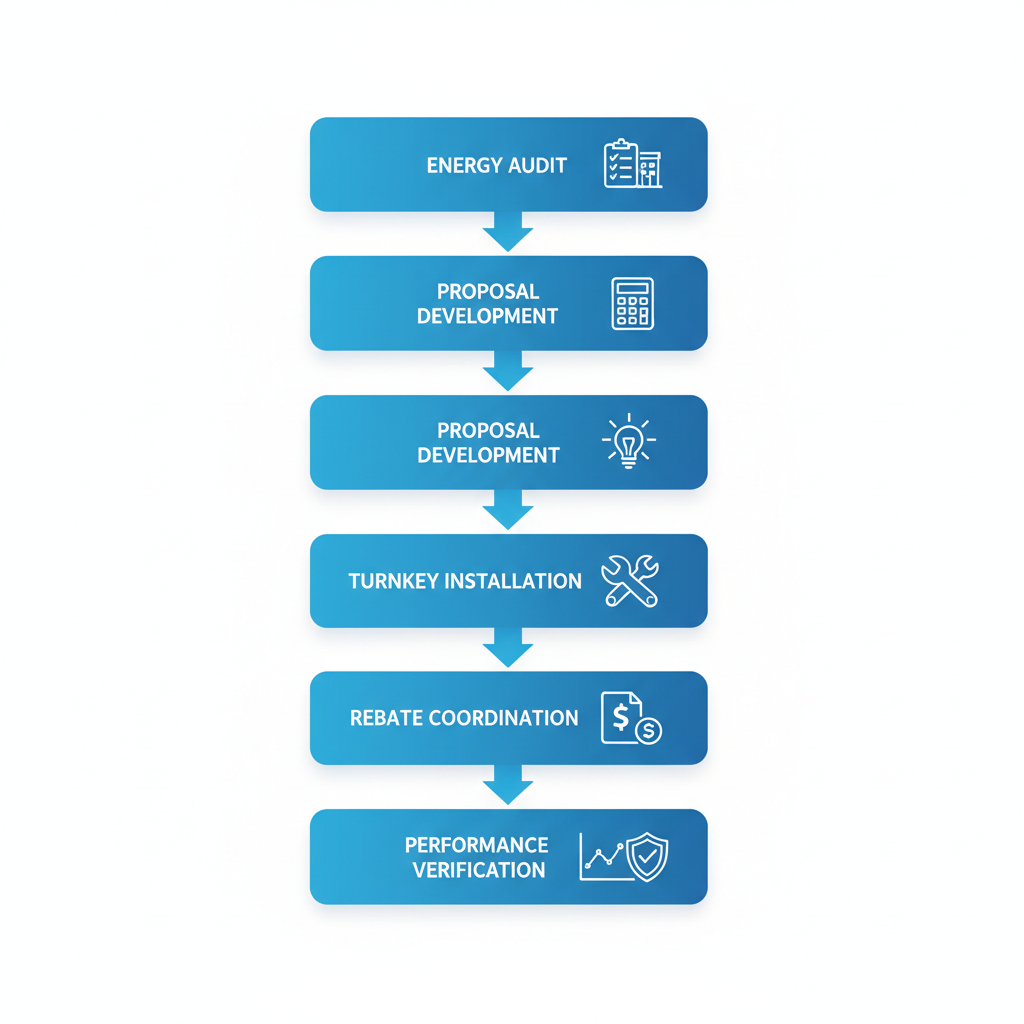
Step-by-step LED retrofit implementation process
This visual outlines the end-to-end flow, reinforcing how led retrofit services integrate audits, installs, rebates, and financing into a cohesive strategy for Atlanta properties.
Advanced Strategies for LED Retrofit Savings
Maximizing returns on LED retrofits requires more than basic installation; it demands optimized LED strategies tailored to Atlanta’s commercial landscape. Property managers in Atlanta can achieve high-ROI lighting upgrades by leveraging local utility rates, which average $0.07 per kWh for commercial users, and stacking incentives from Georgia Power and federal programs. For instance, a simple savings formula–(Existing Wattage × Hours Used × Rate) – (LED Wattage × Hours Used × Rate) – Maintenance Costs–reveals potential reductions of 50-70% in energy expenses for high-use facilities. These advanced tactics not only cut costs but also enhance scalability across portfolios, ensuring long-term value for owners seeking immediate cash flow improvements.
In industrial settings, such as warehouses and manufacturing sites in Atlanta, commercial LED retrofits shine for high-bay fixtures and exterior applications. Upgrading to durable, high-lumen LEDs in these areas can slash energy use by up to 75%, particularly for commercial building outdoor LED lighting that withstands Georgia’s humid climate. Industrial LED solutions from experienced led lighting retrofit companies focus on zero-upfront models, allowing facilities to implement without capital outlay through performance-based financing. However, scalability pitfalls arise if audits overlook fixture diversity; comprehensive site assessments prevent mismatches and ensure uniform performance across large portfolios.
Several factors influence ROI in Atlanta, including baseline energy audits, rebate eligibility, and installation efficiency. Atlanta-specific rebates from Georgia Power can cover 30-50% of project costs for qualifying upgrades, accelerating payback while addressing rising utility demands in commercial properties.
The following table outlines cost savings projections for LED retrofits in Atlanta commercial properties, based on Atlanta utility rates and DOE data:
| Scenario | Annual Savings | Payback Period |
|---|---|---|
| Office Retrofit | $5,000-15,000 per floor | 1-2 years |
| Retail Exterior | $3,000-10,000 per site | 6-18 months |
| Industrial High-Bay | $10,000-30,000 per facility | 1-3 years |
| With Rebates | 20-50% faster payback | Immediate cash flow positive |
These projections highlight how office and industrial scenarios yield substantial annual savings, with rebates transforming investments into quick wins. To achieve optimal outcomes, start with a detailed energy audit that verifies fixture counts and usage patterns. Follow up by stacking rebates–combining utility incentives with federal tax credits–for enhanced returns. Partner with local experts like Green Property Advisors, who specialize in documented ROI for Atlanta clients.
Selecting reliable contractors is crucial for verified savings. Top led lighting retrofit companies in Atlanta offer led retrofit services with performance guarantees, including post-installation reporting to confirm energy reductions. Advanced tips include:
- Prioritizing rebate navigation to avoid application delays.
- Integrating smart controls for 20% additional efficiency.
- Scheduling phased rollouts to minimize disruptions in portfolios.
By focusing on these elements, property managers can justify expansions, turning retrofits into strategic assets that boost property values and occupant satisfaction.
Common Questions on LED Retrofits Answered
This FAQ on LED upgrades addresses key concerns for Atlanta property owners considering retrofits. Our retrofit Q&A draws from expert insights to guide your decisions.
How long does an LED retrofit audit typically take? A site audit for led retrofit services usually takes 1-2 hours, with no disruption to daily operations. Green Property Advisors schedules quickly for Atlanta clients.
Will commercial led retrofits disrupt my business? Installations occur in phases over weekends or off-hours, minimizing downtime. Vantix experts note retrofits often complete in days without halting production.
Am I eligible for rebates on LED retrofits? Yes, most Atlanta commercial properties qualify for utility rebates covering up to 50% of costs. Renovo Energy Guide confirms eligibility based on energy savings projections.
What financing options exist for LED retrofits? Zero-upfront-cost financing through Green Property Advisors allows immediate savings. Renovo highlights utility programs that repay via monthly bill reductions, ideal for cash flow.
How much maintenance is needed post-LED retrofit? LEDs require minimal upkeep, lasting 50,000+ hours. Vantix recommends annual inspections, far less than traditional bulbs, ensuring long-term reliability.
What Atlanta-specific incentives for retrofits? Local Georgia Power rebates and tax credits support Atlanta retrofits, often yielding 2-3 year paybacks. Contact us for tailored incentive navigation.
How to find reliable LED lighting retrofit companies? Seek experienced local firms with rebate expertise. For Atlanta, turn to a trusted LED light company commercial like Green Property Advisors for proven results.
Are LED retrofit services suitable for industrial buildings? Absolutely, industrial LEDs boost efficiency and safety in high-bay areas. Our services ensure seamless upgrades for Atlanta facilities.
Ready for personalized answers? Contact Green Property Advisors today to schedule your free audit and resolve any retrofit questions.
Achieving Energy Efficiency with LED Retrofits
In summary, LED retrofits offer a smart path to substantial energy savings and enhanced lighting quality for properties in Atlanta. By partnering with experienced led lighting retrofit companies like Green Property Advisors, businesses can achieve rapid ROI through commercial led retrofits, leveraging utility rebates and zero-upfront financing options. This efficient retrofit summary underscores the fundamentals, from audits to installations, ensuring minimal disruption and verified performance.
Take the next step today: Contact Green Property Advisors in Atlanta for your free energy audit and customized proposal on led retrofit services. Our team aligns with top contractor standards, as recognized in industry directories, to deliver turnkey solutions that boost profitability and sustainability.