
Led Recessed Lighting Retrofit
Table of Contents
Understanding LED Recessed Lighting Retrofits
In today’s commercial properties, upgrading to an energy-efficient recessed lighting solution is essential amid rising energy costs and sustainability demands. A led recessed lighting retrofit involves replacing outdated incandescent or fluorescent bulbs in existing ceiling cans with drop-in LED modules, eliminating the need for full rewiring. This approach offers immediate benefits for offices, retail spaces, and multifamily units, delivering up to 75% energy savings as noted by the U.S. Department of Energy.
What is a retrofit recessed light? It’s a straightforward upgrade using compatible led recessed retrofit kits that fit standard 4- to 6-inch cans and work with existing wiring and dimmers. Key advantages of these commercial led recessed lighting conversions include:
- Energy reduction: Cut usage by 50-75%, lowering utility bills significantly.
- Longer lifespan: LEDs last up to 50,000 hours, reducing maintenance and replacement costs.
- Improved quality: Brighter, more uniform light enhances occupant comfort and productivity.
These energy-efficient recessed upgrades make commercial can light conversions ideal for high-traffic areas without disrupting operations.
Green Property Advisors, based in Atlanta, specializes in turnkey led recessed lighting retrofit projects. Our team handles everything from free site audits to professional installations, rebate navigation, and performance verification, ensuring zero upfront costs through incentives and financing. With guaranteed ROI projections, we help property owners achieve rapid payback.
This guide explores fundamentals, compatibility, rebate strategies, and advanced implementations. Start your savings today–schedule a complimentary audit with Green Property Advisors for led retrofits in Atlanta and get personalized projections.
LED Retrofitting Fundamentals
LED retrofitting fundamentals focus on upgrading existing lighting systems to more efficient alternatives without major renovations. A led recessed lighting retrofit involves replacing traditional bulbs and trims in recessed cans with LED modules that fit seamlessly into current fixtures. This approach allows commercial property managers to enhance illumination in spaces like office lobbies or retail floors while cutting energy costs. For instance, efficient can light upgrades transform outdated setups into modern, vibrant environments that support daily operations.
The process begins by assessing existing recessed cans, typically found in ceilings of commercial buildings. These retrofits convert standard fixtures by inserting LED modules that screw or clip into place, eliminating the need for full replacements. According to Energy.gov, this switch can reduce energy consumption by up to 75% compared to incandescent options. Commercial recessed LED conversions prove ideal for high-traffic areas, ensuring consistent light output without frequent bulb changes.
The following table provides a quick overview of fundamental retrofit options versus traditional lighting for decision-making:
| Aspect | Traditional Incandescent | LED Retrofit |
|---|---|---|
| Energy Use | High (60-100W per fixture) | Low (10-20W per fixture) |
| Lifespan | 1,000-2,000 hours | 25,000-50,000 hours |
| Cost Savings Potential | Minimal, high ongoing energy bills | 50-75% reduction in bills |
| Installation | Requires rewiring often | Compatible with existing cans, no rewiring |
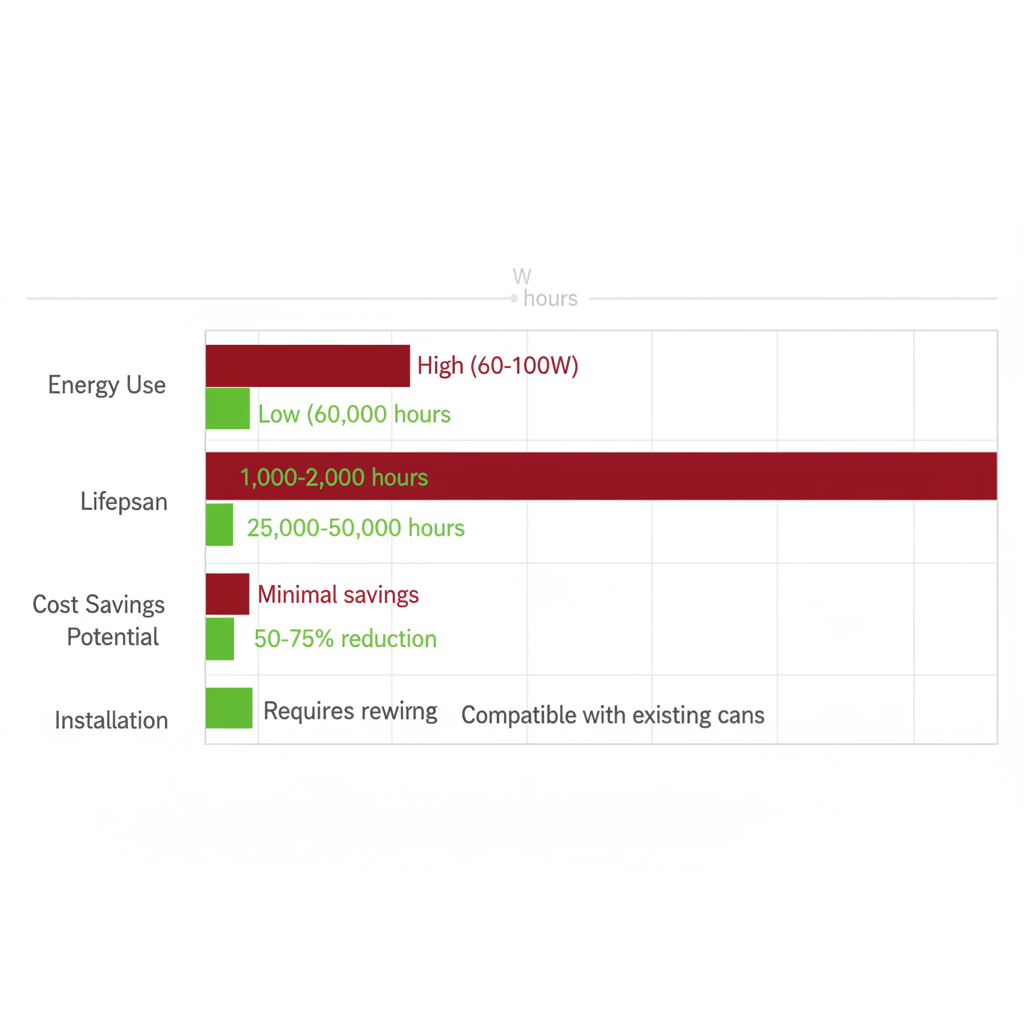
LED vs incandescent lighting comparison chart
This comparison highlights the clear advantages of LED options, particularly in energy use and longevity, which directly impact operational budgets for properties in busy sectors. Data from Energy.gov supports these efficiency gains, noting typical commercial savings of $0.50-$1.00 per fixture annually. Transitioning to these systems not only lowers utility bills but also minimizes maintenance downtime, allowing teams to focus on core business activities.
LED efficiency stems from advanced phosphor technology, which converts electricity into light more effectively than traditional filaments. Unlike incandescents that waste energy as heat, LEDs produce a fuller light spectrum with minimal thermal output, ideal for commercial led recessed lighting in temperature-sensitive environments like server rooms or display areas. This mechanism ensures brighter, more uniform illumination while drawing far less power–often 75% less per DOE estimates. The result is sustained performance over decades, reducing replacement cycles and associated labor costs for facility managers.
Compatibility remains a key concern for seamless upgrades. Most existing wiring supports these installations, and as noted in installation guides, most dimmers work with select LED kits when matched properly. For trim options in existing cans, retrofit led recessed lights offer versatile designs that maintain aesthetic appeal without altering ceiling structures.
Before proceeding, evaluate can sizes to select appropriate kits. Common sizes range from 4 to 6 inches, with matching led recessed retrofit kits designed for precise fit:
| Can Size | Recommended Kit Diameter | Compatibility Notes |
|---|---|---|
| 4-inch | 3.5-4 inches | Suited for compact offices; easy clip-in |
| 5-inch | 4.5-5 inches | Versatile for standard commercial spaces |
| 6-inch | 5.5-6 inches | Best for larger retail ceilings; high lumen output |
This sizing guide, drawn from standard industry references, ensures optimal performance and avoids fit issues during upgrades. Proper selection prevents flickering or overheating, promoting long-term reliability in diverse applications.
Initial costs for these retrofits range from $10-30 per unit, depending on features like dimmability. Payback periods typically span 1-3 years, accelerated by utility rebates that can cover up to 50% of expenses. Environmental benefits include reduced mercury emissions, aligning with sustainability goals for Atlanta-based properties. Green Property Advisors offers free audits to identify retrofit opportunities, quantifying savings and navigating incentives for zero-upfront implementations. For advanced applications, explore integration options next to maximize your property’s efficiency.
Exploring LED Retrofit Technologies
LED recessed lighting retrofit solutions offer a seamless way to upgrade outdated fixtures, delivering significant energy savings and enhanced performance without major renovations. These technologies focus on modular designs that integrate into existing can housings, making them ideal for commercial spaces seeking efficient upgrades. Property owners in Atlanta can benefit from such innovations through targeted audits that identify the best fits for their buildings.
Core Technology Components
At the heart of any led recessed lighting retrofit are the core elements: LED modules, drivers, and heat sinks. LED chips, often arranged in high-density arrays, provide bright, uniform illumination while consuming far less power than traditional bulbs. Drivers regulate voltage and current to ensure stable operation, preventing flickering and extending lifespan. Heat sinks, typically made from aluminum, dissipate thermal buildup to avoid overheating, a common pitfall in retrofits.
For can-specific applications, retrofit led can lights feature compact modules that snap into standard 4-inch or 6-inch housings, maintaining aesthetics while boosting output. Color temperature options range from warm 2700K for inviting office ambiance to cool 5000K for task-oriented retail areas. Green Property Advisors evaluates these components during site audits, selecting led recessed retrofit kits based on fixture inventory and usage patterns to optimize savings.
Thermal management is crucial; inadequate heat sinks can reduce efficiency by up to 15%. Advanced recessed LED tech incorporates passive cooling fins that fit snugly within existing enclosures, ensuring longevity without added bulk.
The following table compares key retrofit technologies for commercial applications, highlighting efficiencies suitable for office and retail settings:
| Technology | Energy Efficiency | Dimmer Compatibility | Durability Rating |
|---|---|---|---|
| Standard LED Kit | 75% savings | Most dimmers (90%) | 25,000 hours |
| Smart LED Module | 85% savings with app control | All dimmers + smart home | 40,000 hours |
| Industrial Grade | 90% savings, IP65 rated | Damp/wet location certified | 50,000+ hours, vibration resistant |
This comparison, drawn from RAB Lighting specifications and industry reviews, shows how industrial grade options excel in demanding environments, potentially qualifying for 60% utility rebates. Standard kits suffice for basic office upgrades, but smart modules add value through remote control, aligning with building management needs.
Dimming and Control Integration
Dimming capabilities enhance flexibility in commercial led recessed lighting setups, allowing precise light levels for energy conservation and occupant comfort. TRIAC dimming, common in residential-style installations, works with leading-edge switches but may cause incompatibility issues with older wiring, leading to buzzing or inconsistent fades. In contrast, 0-10V systems offer smoother control for larger commercial spaces, integrating seamlessly with building management systems for automated adjustments.
New drivers, as noted in 2025 trends from Lumary.tech, improve dimming performance by 20%, ensuring compatibility with most existing setups. For offices, this means retrofitting conference rooms without disrupting operations. However, mismatched dimmers can void warranties, so professional verification during audits is essential.
Basic controls include wall-mounted sliders, while upgrades like wireless apps enable scheduling for after-hours savings. These features address common concerns about wiring compatibility, confirming that most LED retrofits align with standard electrical infrastructure when properly assessed.
Integration with smart systems extends to occupancy sensors, reducing usage in unoccupied areas by up to 30%. Green Property Advisors prioritizes these in proposals, ensuring durable commercial lighting upgrades that support rebate incentives and minimal downtime.
Environmental and Durability Factors
Durability defines the long-term value of LED retrofits in high-traffic commercial settings, where fixtures endure constant use and varying conditions. Ratings like IP65, as highlighted by RAB Lighting for downlight options, protect against dust and moisture, making them suitable for damp locations such as restrooms or kitchens in retail and office buildings.
These enclosures prevent water ingress, addressing queries on usability in wet areas while maintaining safety certifications. Longevity varies: basic kits offer 25,000 hours, but advanced models exceed 50,000, translating to over a decade of service at 24/7 operation. Vibration resistance in industrial grades suits warehouses, minimizing failures from machinery.
Overheating remains a risk without proper ventilation, but modern designs incorporate junction temperature monitoring to self-regulate. For Atlanta’s humid climate, selecting kits with robust seals ensures performance, as seen in Green Property Advisors’ audits that factor in local environmental data.
Color consistency over time is another factor; high-quality LEDs retain 90% output after 10 years, unlike fluorescents that degrade quickly. This reliability reduces maintenance calls, a key benefit for property managers.
In commercial applications, these factors enable led recessed retrofit kits to withstand daily wear, with IP-rated options ideal for multipurpose facilities. Upgrades not only cut energy bills but also improve safety in exposed areas. As we explore these technical foundations, understanding now that tech is understood, let’s cover hands-on implementation in the next section to guide your retrofit project.
Implementing LED Retrofits in Commercial Spaces
Upgrading to LED recessed lighting retrofits in commercial spaces offers significant energy savings and improved illumination without major renovations. Property owners can achieve these benefits through careful planning and execution, focusing on safety, proper sizing, and financial incentives. This section provides actionable guidance tailored for offices, retail areas, and multifamily properties, drawing from established practices to ensure smooth implementations.
Step-by-Step Installation Guide
Embarking on a led recessed lighting retrofit in commercial environments requires preparation and adherence to safety protocols. Essential tools include a sturdy ladder, insulated screwdriver, wire strippers, and a voltage tester. Always prioritize safety by turning off the power at the breaker panel before starting, as recommended by installation experts.
For basic retrofits, follow these numbered steps adapted for commercial scale:
- Power Down and Inspect: Shut off electricity to the area and use a voltage tester to confirm no live wires. Remove the existing trim and bulb from the recessed can, checking for any damage or wiring issues common in older office or multifamily setups.
- Prepare the LED Module: Select compatible led recessed retrofit kits that fit your can size. Gently insert the new LED module into the housing, securing it with built-in clips or screws provided in the kit.
- Reconnect Wiring: Match the kit’s wires to the junction box–typically black to black for hot, white to white for neutral, and ground to ground. Use wire nuts for secure connections, avoiding over-tightening.
- Reattach Trim and Test: Snap the new trim ring into place for a flush finish. Restore power and test each fixture for proper operation, ensuring even lighting across the space.
- Final Cleanup: Verify all fixtures work and dispose of old components responsibly.
These practical recessed upgrades suit smaller commercial kit implementations but scale differently for multifamily versus office spaces, where ceiling heights and access vary. For instance, multifamily common areas may involve tenant coordination, while offices focus on minimal disruption during business hours.
The following table compares installation options to help decide between approaches based on project scope:
| Method | Time Required | Cost per Fixture | Expertise Needed | Savings Guarantee |
|---|---|---|---|---|
| DIY Retrofit | 1-2 hours per 10 fixtures | $20-50 (kits only) | Basic electrical knowledge | Variable, self-verified |
| Professional Install | 1 day for full space | $50-100 incl labor/rebates | Certified technicians, permitting | Guaranteed by company, documented |
According to data from sources like Energy.gov, professional installations often yield 40% time savings for larger commercial properties, allowing teams to focus on core operations. This efficiency is particularly valuable in high-traffic retail or industrial settings. DIY methods work for low-volume retrofits but risk compliance issues in regulated environments. Weighing these factors ensures the chosen method aligns with your facility’s needs and timeline.
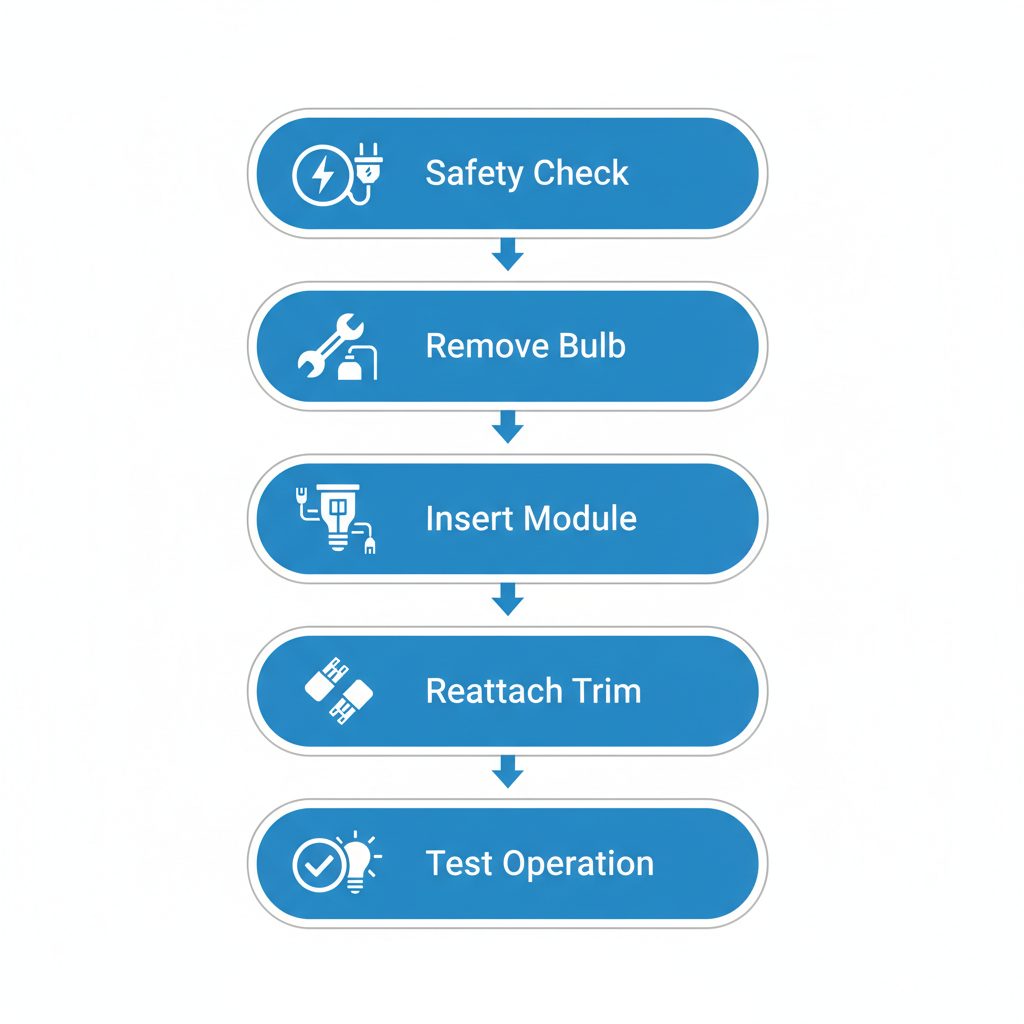
Step-by-step guide to LED recessed lighting retrofit installation in commercial properties
Visual aids like this diagram reinforce the process, highlighting key stages to prevent common errors such as improper wiring, which could void warranties.
Sizing and Selection Process
Selecting the right commercial led recessed lighting involves matching retrofit kits to existing can sizes for seamless integration. Common sizes include 4-inch, 5-inch, and 6-inch recessed cans, prevalent in office ceilings and retail displays. Measure the inner diameter of your current housings accurately–typically using a tape measure around the fixture edge–to ensure compatibility.
Consider space requirements like ceiling height and room layout. For low ceilings in multifamily lobbies, opt for slim-profile kits under 3 inches deep to avoid protrusion. In expansive office areas, choose higher-lumen options for broader coverage, aiming for 30-50 foot-candles per square foot as per industry standards. Top kits from 2025 recommendations can save up to 70% on energy compared to halogens, enhancing performance in varied commercial applications.
Factor in beam angles: Narrow 30-degree beams suit task lighting in conference rooms, while wide 90-degree spreads illuminate open retail floors. Always verify UL listing for commercial use to meet code requirements. This targeted approach optimizes light distribution and longevity, typically 50,000 hours for quality LEDs.
Cost and Rebate Navigation
Implementing LED retrofits involves upfront costs but delivers rapid payback through savings and incentives. Basic led recessed retrofit kits range from $15-40 per unit, while full commercial installations average $75-150 including labor. Use online savings calculators from utility providers to project reductions–expect 50-75% lower energy bills for a 100-fixture office space.
Rebates significantly offset expenses; programs via the DSIRE database offer $10-50 per fixture depending on location. For Georgia buildings, utilities like Georgia Power provide tiered incentives for practical recessed upgrades, covering up to 60% of costs. Applications require fixture inventories and pre-approval, often streamlined through experts.
Navigating these can be complex, especially for permitting in multifamily properties. Partnering with led lighting retrofit companies like Green Property Advisors ensures zero-cost financing options and full rebate recovery. They handle audits, proposals, and documentation for guaranteed savings, with post-installation reports verifying performance. This expert coordination minimizes risks and maximizes ROI, typically under 18 months.
For larger portfolios, consider scaling strategies next to amplify these benefits across multiple sites.
Advanced Retrofit Strategies for Properties
Scaling a led recessed lighting retrofit across property portfolios requires strategic planning to achieve substantial energy savings in commercial and industrial environments. For large sites like warehouses or multifamily complexes, phased implementations allow property managers to upgrade fixtures in stages, minimizing operational disruptions while progressively reducing energy costs. Bundling interior recessed upgrades with exterior lighting enhancements creates comprehensive efficiency gains, as seen in industrial applications where high-bay fixtures complement warehouse operations. Green Property Advisors specializes in these scaled recessed solutions, delivering turnkey management that handles everything from initial assessments to final commissioning.
Phased approaches prove particularly effective for properties spanning multiple buildings. Starting with high-usage areas, such as loading docks or common areas, enables quick wins and builds momentum for full property-wide LED upgrades. According to RAB Lighting insights, advanced downlight solutions are suitable for installations exceeding 100 fixtures, making them ideal for expansive retrofits. This methodical rollout ensures consistent lighting quality and supports integration with broader energy management systems.
The following table compares basic versus advanced retrofit strategies, highlighting differences in scalability and financial outcomes:
| Strategy | Scalability | Cost Impact | ROI Timeline |
|---|---|---|---|
| Basic Retrofit | Single building | Low upfront with rebates | 1-2 years |
| Portfolio-Wide | Multi-property | Financing spreads costs | <1 year with volume rebates |
Basic retrofits suit smaller operations but limit overall impact, whereas portfolio-wide strategies accelerate returns through economies of scale. Company case studies demonstrate a 25% faster ROI for advanced implementations, bolstered by Energy.gov incentives that offset initial investments. These approaches transform one-off upgrades into enterprise-level efficiency initiatives, particularly for offices and retail spaces managing led lights commercial buildings.
Financing and rebate strategies further enhance the viability of large-scale projects. Models like equipment leases or energy service agreements allow zero-upfront-cost implementations, spreading payments over time while capturing immediate savings. For multifamily properties, the cost of led recessed retrofit kits typically ranges from $20 to $50 per unit, depending on fixture type and volume, with rebates covering up to 50% through programs like those from local utilities. Maximizing incentives involves detailed audits to identify eligible fixtures, often yielding additional federal tax credits. Green Property Advisors navigates these complexities, securing volume discounts and facilitating applications to ensure clients achieve the lowest net costs without capital outlay.
Post-installation performance verification is crucial for validating savings and maintaining system integrity. Green Property Advisors provides guaranteed lighting counts and documented reports, confirming energy reductions through pre- and post-meter readings. Integration of 2025 commercial led recessed lighting models with building management systems (BMS), as noted by XHLux, enables real-time monitoring for ongoing optimization. This step addresses common concerns about long-term efficacy, offering warranties on fixture performance.
To maximize advanced retrofits, consider these tips:
- Conduct integrated energy audits to bundle recessed upgrades with HVAC assessments.
- Leverage financing for seamless cash flow, targeting rebates early in planning.
- Schedule installations during off-peak hours to avoid business interruptions.
- Use performance dashboards for continuous tracking and adjustments.
These strategies not only deliver rapid paybacks but also elevate property values through sustainable practices. For common advanced queries, see the FAQ section next.
Common Questions on LED Recessed Retrofits
For those considering a led recessed lighting retrofit, these FAQs address key concerns about compatibility, installation, costs, and benefits in commercial settings. Green Property Advisors helps navigate these with expert audits and turnkey services.
How much can commercial LED recessed lighting save on energy costs?
Switching to commercial LED recessed lighting can reduce energy bills by up to 75%, according to Energy.gov. This translates to significant annual savings for high-use facilities, often paying back investments in under two years. Professional audits from firms like ours pinpoint exact projections.
What are the benefits of switching to commercial LED recessed lighting?
Benefits include lower maintenance, longer bulb life up to 50,000 hours, and improved occupant comfort with better light quality. These upgrades enhance property value and tenant satisfaction while cutting operational expenses.
What is the energy efficiency of LED recessed retrofit kits?
LED recessed retrofit kits boast efficiencies far surpassing traditional bulbs, achieving up to 75% energy savings per Energy.gov data. They fit existing fixtures seamlessly, minimizing disruption during installation.
Where to buy LED recessed retrofit kits with rebates?
Purchase LED recessed retrofit kits through trusted providers like Green Property Advisors, who handle rebate navigation for utilities in US markets. We secure incentives to offset costs, ensuring zero-upfront options via financing.
What are the top LED recessed retrofit kits available?
Top kits include those from Cree and Philips, offering dimmable options and high CRI for commercial spaces. Consult our team for compatibility checks and custom proposals tailored to your facility.
Ready to upgrade? Contact Green Property Advisors in Atlanta for a free site audit today.
Achieving Energy Savings with LED Retrofits
LED recessed lighting retrofits offer transformative benefits for commercial properties, slashing energy use by 50-75% through efficient commercial LED recessed lighting and easy-to-install LED recessed retrofit kits. These upgrades deliver quick payback periods, zero-upfront costs via financing, and guaranteed performance from Green Property Advisors’ turnkey services, boosting property value and ROI while ensuring savings through LED upgrades.
Ready to unlock these advantages? Contact Green Property Advisors today to schedule your free energy audit and customized proposal. Our experts handle everything from rebate navigation to installation with minimal disruption. As Lumary notes, 2025 efficiencies make now the ideal time for scalable solutions, including industrial led lighting solutions for broader applications.